
News
Traficom updates winter guidance for general aviation pilots
Finland’s Traficom has updated its winter guidance for general and recreational aviation pilots. The update, dated 16 October 2026, covers winter maintenance at uncontrolled aerodromes and incident examples from the previous winter season. (uutiskirjeet.traficom.fi)
By PrivatePilot.NEWS · published 2 November 2026 · 14:00 UTC
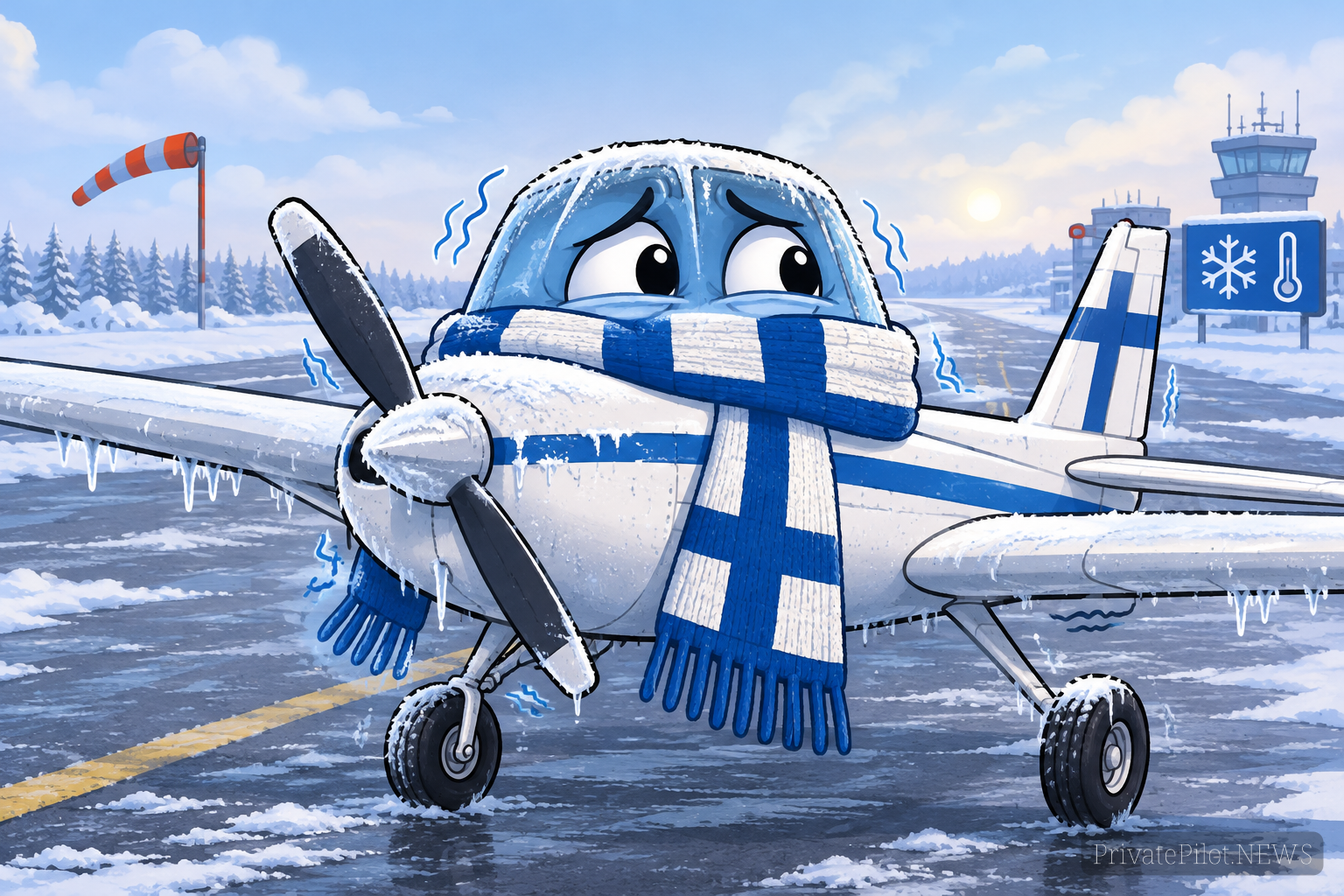
Traficom has updated its guidance on winter maintenance at uncontrolled aerodromes. The winter guidance is aimed at general and recreational aviation pilots, including flight instructors, and covers topics such as icing and flight preparation. (uutiskirjeet.traficom.fi)
Traficom has also updated the incident examples with events from the previous winter season. The main content of the winter guidance remains largely unchanged from previous years. (uutiskirjeet.traficom.fi)
Check winter maintenance and current runway conditions
Winter maintenance information is published for each aerodrome in Finland’s Aeronautical Information Publication (AIP), while temporary changes are notified by NOTAM, according to Traficom. (uutiskirjeet.traficom.fi)
Only some of Finland’s uncontrolled aerodromes have winter maintenance. Traficom stresses that pilots must check current AIP information and NOTAMs before flying and assess whether the aerodrome is usable in the prevailing conditions. (uutiskirjeet.traficom.fi)
Snow ploughing does not necessarily mean bare asphalt. Snow clearance can leave a hard snow or ice surface. Wet ice can result in poor braking action, and crosswinds can push the aircraft towards snowbanks. (uutiskirjeet.traficom.fi)
Icing changes aircraft characteristics
The authority also reminds pilots that aircraft not equipped and approved for flight in icing conditions must avoid such conditions. If unexpected icing occurs, Traficom recommends leaving the conditions immediately and contacting air traffic services in the event of severe icing or uncertainty. (uutiskirjeet.traficom.fi)
Ice on the wings can reduce lift and increase stall speed. The stall warning system may not provide the same protection as with a clean wing. The engine and pitot tube can also be affected. (uutiskirjeet.traficom.fi)
Five other factors to watch for
- Carburettor icing: Sunshine and above-freezing temperatures do not rule out icing. Consider temperature and dew point together, and follow the flight manual when using carburettor heat. (uutiskirjeet.traficom.fi)
- Visibility: Snowfall reduces visibility, and low sun can cause glare. Snow cover without distinct shadows makes judging height more difficult. (uutiskirjeet.traficom.fi)
- Taxiing: Keep clear of snowbanks and other aircraft. Propeller wash can blow snow onto the aircraft’s critical surfaces. (uutiskirjeet.traficom.fi)
- Brakes: Snow can melt on warm brakes and then freeze. A low taxi speed reduces the need for braking. (uutiskirjeet.traficom.fi)
- Navigation: Snow-covered lakes and fields can look alike. Roads, railways and built-up areas may be easier to recognise. (uutiskirjeet.traficom.fi)
This summary does not replace the flight manual, applicable regulations or club and school procedures. (uutiskirjeet.traficom.fi)