
News
Denmark proposes ADS-B requirement in uncontrolled airspace
Trafikstyrelsen proposes an ADS-B requirement in uncontrolled Danish airspace and a transponder mandatory zone covering all controlled airspace. The consultation deadline is 6 November 2026, with the requirements scheduled to be phased in during 2027 and 2028. (trafikstyrelsen.dk)
By PrivatePilot.NEWS · published 31 October 2026 · 13:05 UTC
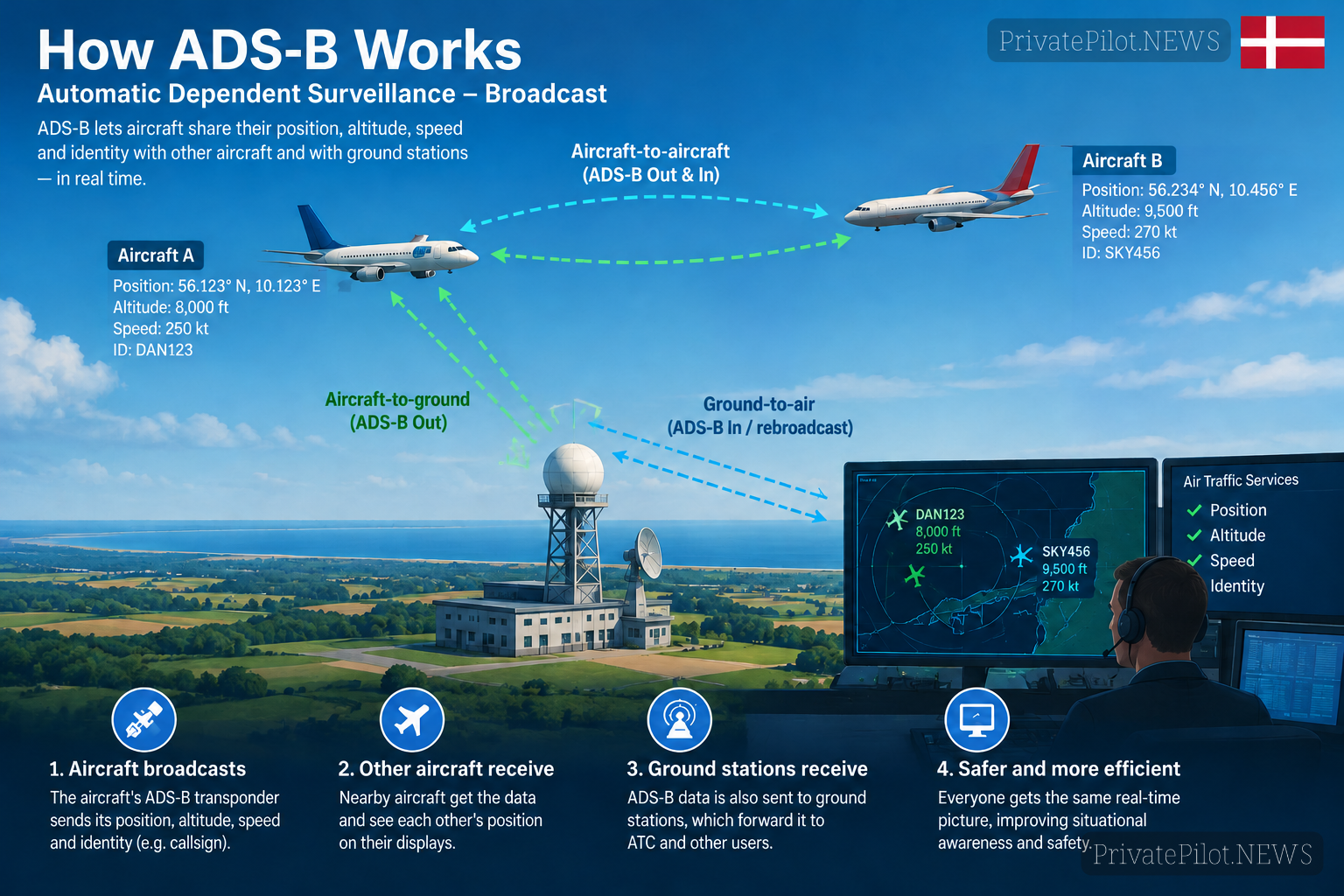
Denmark's Trafikstyrelsen has launched a consultation on proposed new electronic conspicuity requirements. The authority wants to make smaller aircraft easier to identify and track, both to improve flight safety and to facilitate increased drone activity. The proposal covers ADS-B in uncontrolled airspace and a transponder mandatory zone covering all controlled airspace. (trafikstyrelsen.dk)
Two different equipment requirements
In uncontrolled airspace, the proposal would require ADS-B equipment that automatically transmits the aircraft's position. In controlled airspace, the plan is for a general SSR transponder requirement through the establishment of a transponder mandatory zone. The transponder enables air traffic control and other surveillance systems to identify and track the aircraft. Trafikstyrelsen describes both crewed aircraft and drones as falling within the scope of the planned transponder requirement. (trafikstyrelsen.dk)
Around 800 aircraft estimated to be affected
Trafikstyrelsen estimates that the ADS-B requirement will affect around 800 aircraft, mainly smaller aeroplanes. The cost is estimated at around DKK 50,000 per aircraft, but substantially less if the necessary transponder is already installed. Larger aircraft are expected to be largely unaffected because, according to the authority, they already have the necessary equipment as a result of EU rules. (trafikstyrelsen.dk)
The authority lists provisional exemptions for ultralight aircraft, unpowered gliders, hang gliders, paragliders and balloons. How these exemptions apply to the ADS-B requirement and the transponder requirement in controlled airspace must be clarified before they can be relied upon for a specific flight. (trafikstyrelsen.dk)
Consultation deadline: 6 November
The deadline for consultation responses is Friday 6 November 2026. The regulations are scheduled to enter into force on 1 January 2027, but with transition periods depending on the aircraft's weight. Entry into force therefore does not mean that all affected aircraft must be fully equipped by that date. (trafikstyrelsen.dk)
Could affect Norwegian private pilots
Equipment requirements for Danish airspace could also affect Norwegian private pilots flying to or through Denmark. However, the precise scope for foreign-registered aircraft, the transition arrangements and any exemptions must be clarified before it can be established which requirements a Norwegian-registered aircraft will face. For now, the dates represent a proposed timetable, not confirmation that the requirements have been formally adopted. (trafikstyrelsen.dk)
Aims to provide a clearer picture of air traffic
The measures form part of a broader Danish effort to ensure the safe sharing of airspace between drones and crewed aviation. Trafikstyrelsen also points to the security situation: improved electronic conspicuity is intended to make it easier for the police, the armed forces and emergency preparedness authorities to monitor air traffic and distinguish between legal and illegal flights. (trafikstyrelsen.dk)