
News
Cessna overturned while taxiing behind United aircraft
A Cessna 172 with two people on board overturned at John Wayne Airport in California while taxiing behind a United Airlines aircraft. No one was injured. US aviation authorities are investigating the incident, and the cause has not yet been established.
By PrivatePilot.NEWS · published 12 November 2026 · 07:00 UTC
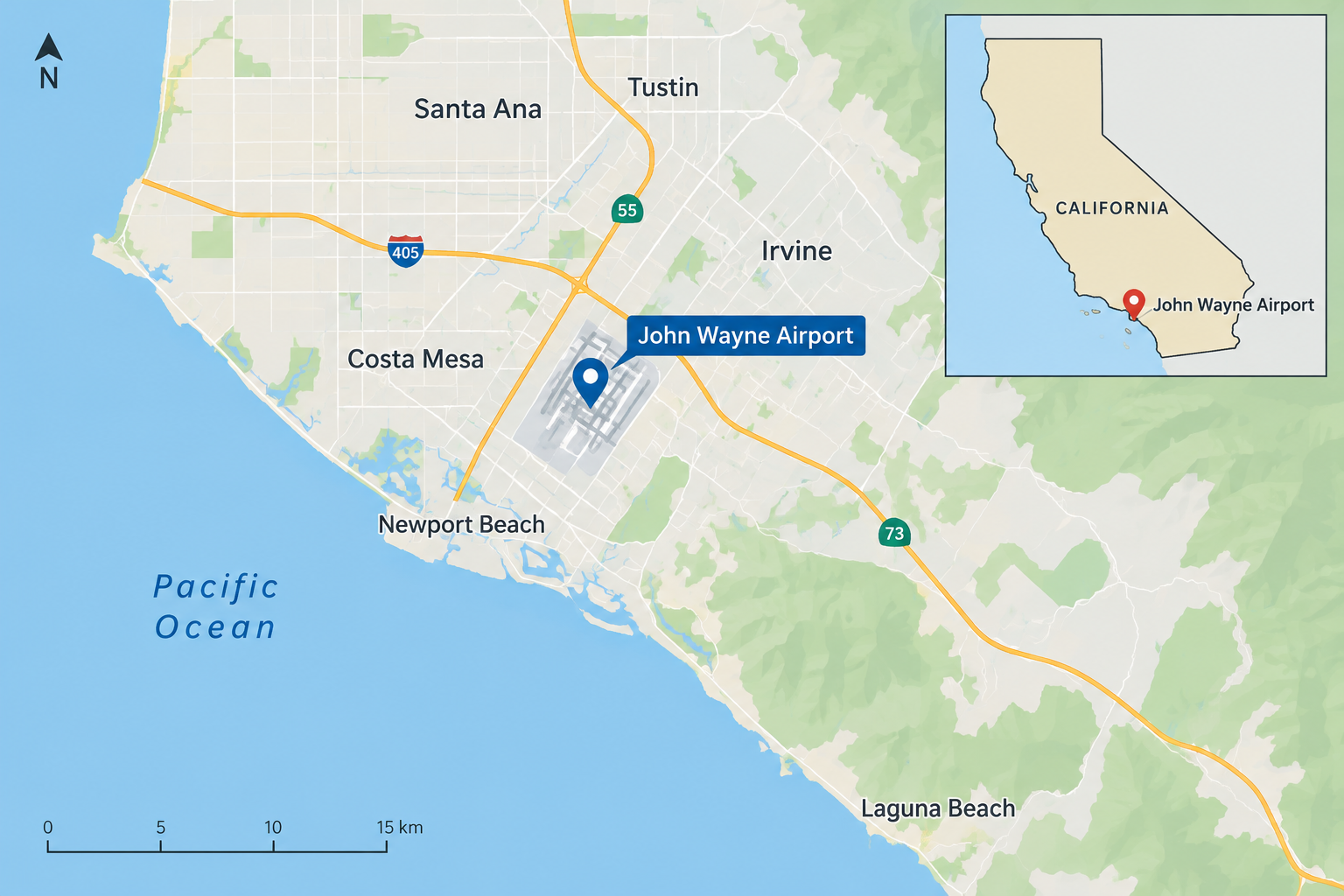
The incident occurred at around 2:30 pm local time on Saturday 7 November 2026 at the airport in Santa Ana, Orange County. According to the Federal Aviation Administration (FAA), the Cessna was blown over while taxiing behind United Airlines flight 2611. The FAA confirms that two people were on board and says it will investigate the incident.
According to Orange County Flight Center, an instructor and a student were on board, reports CBS Los Angeles.
The aircraft came to rest upside down. ABC7 published footage from the scene showing crews and a crane working to turn it upright. The station says both people in the Cessna escaped the incident without injury.
Initial accounts of what had happened were conflicting. Orange County Fire Authority told ABC7 that wind had overturned the aircraft, but would not confirm whether the airflow came from Santa Ana winds or jet blast from a passing jet.
The FAA's account links the incident to taxiing behind the United aircraft. However, the statement contains no final conclusion on the cause and gives neither the distance between the aircraft nor the engine power used. The extent of the damage to the Cessna is also not specified in the agency's preliminary statement.
The incident highlights a known risk at airports where light aircraft and larger jets share the same ground areas. Jet blast is the powerful airflow behind jet engines. In its operational guidance, the FAA warns that jet blast and propeller wash can damage or overturn smaller aircraft on the ground. The agency explicitly cites previous cases in which light aircraft have been overturned or damaged while taxiing behind larger aircraft.
Jet blast must be distinguished from wingtip vortices, often referred to as wake turbulence. These vortices form when wings produce lift. Jet blast comes from the engines and can pose a hazard even during ground operations.
In its guidance document AC 90-66C, the FAA describes an earlier case in which a light aircraft was conducting an engine run-up approximately 150 feet, or around 46 metres, behind and to the side of an airliner. When the larger aircraft increased engine power, the light aircraft sustained wing and propeller damage. The example illustrates that even an aircraft on the ground some distance behind a jet can be exposed to significant forces.
NASA's Aviation Safety Reporting System database has also described how starting to move and turning can create hazardous situations. A jet starting from a standstill may need more engine power than during steady taxiing. During a turn, the direction of the jet blast also changes. Other aircraft, vehicles or people can therefore become exposed as the situation around them changes.
For light aircraft pilots, the FAA stresses the need to keep well clear behind jets. The Aeronautical Information Manual also emphasises that pilots must consider the effects of jet blast and propeller wash on other aircraft and equipment during ground operations. A rotating anti-collision beacon can indicate that engines are running, but the FAA warns against using the light as the sole basis for determining whether engines are operating.